
Who Gets to Define You?
- Apr 13
- 3 min read
Updated: 2 days ago
What Abigail's hug reveals about resentment and identity
I would like to tell you about one of my favorite moments in the Sparkle Valley trilogy. It happens near the end of Book 1.
Up until now, Ivana has pretty much made Abigail's life miserable. She's angry and jealous of her and sees her as a rival who she can’t beat.
And then in the climactic scene, when Ivana and her Inzos have been defeated, Abigail does something unexpected. Instead of declaring victory or gloating, she gives her a hug.
On the surface, this might appear to be a typical children's book moment where the good character chooses kindness. And that's the end. But as with most things in Sparkle Valley, there's more to it.
The reason I find this moment so compelling is it relates directly to the question beneath it:
What happens when someone expects conflict and doesn't get it?
Everyone sees the logic of escalation. We see it all the time on the internet. Road rage, Politics. All kinds interactions. Someone insults you. You insult them back. And it escalates. That's the way this transaction normally occurs.
It’s the natural cycle of things. And on some level it might be justified. But Abigail refuses to play that game.
It's not like she pretends that Ivana's behavior is acceptable. Not at All.
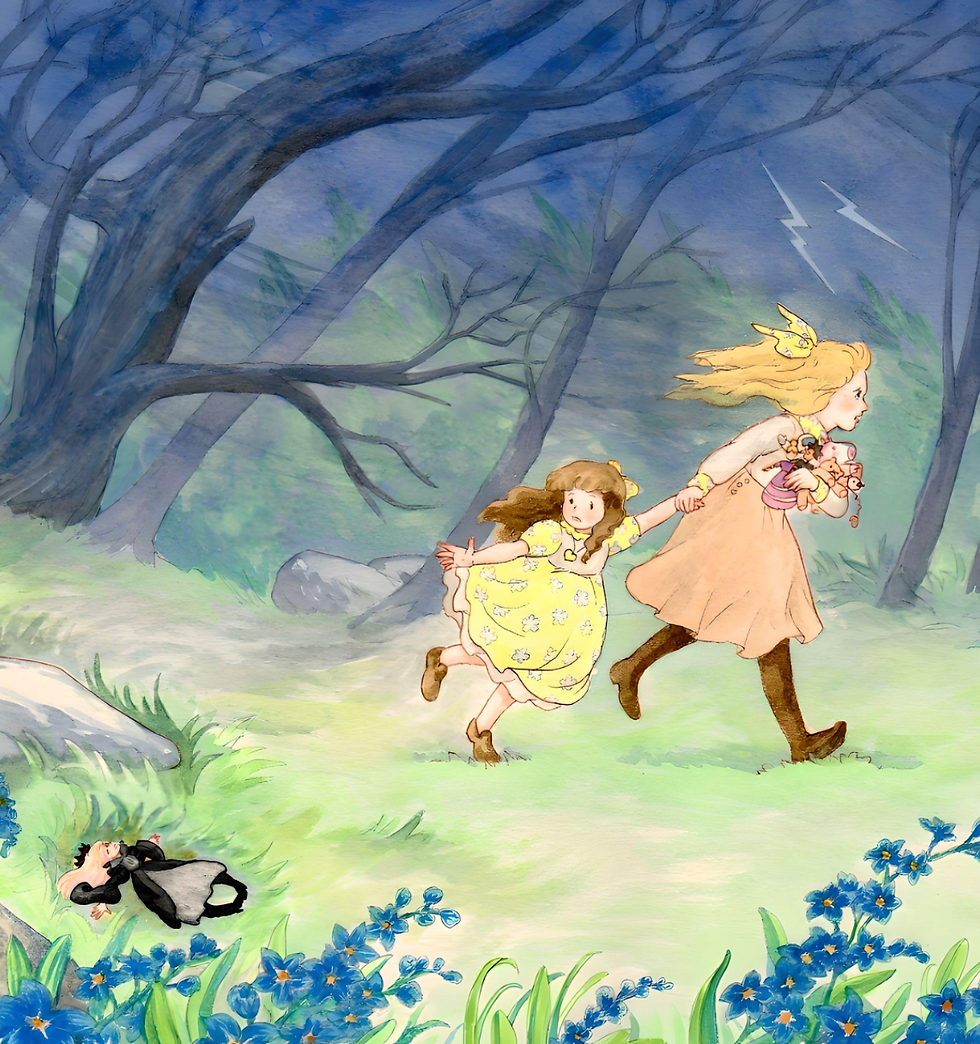
Earlier in the story, Doris helps Abigail see the world through Ivana's eyes. She realizes that Ivana's jealousy didn't appear out of nowhere. It grew out of loneliness and rejection.
"It must hurt when someone you love doesn't love you back."
For the first time, Abigail understands, and that changes everything.
There are echoes of Kant here.
He believed in treating people as ends in themselves rather than means. In other words, everyone possesses a certain amount of dignity that needs to be respected. And Abigail sees something in Ivana that Ivana can no longer see in herself.
And on then on Ivana’s side, we can see Nietzsche:
He talks about “ressentiment,’ which is a way of living when resentment becomes the center of your identity.
That is Ivana’s tragedy. She becomes defined by jealousy. She compares herself to Abigail and sees what she lacks. Thus, her very identity depends on the conflict continuing. And that's exactly why Abigail's kindness is so jarring to her. It removes the fuel from the fire.
Somebody reading all this might see Abigail is weak or overly polite. But I don’t.
What makes the scene so powerful isn't simply that Abigail chooses kindness. It's that she refuses to become the person Ivana's resentment demands.
Remember Major Bob? Let’s listen to him for a second.
After the early run in with Ivana, he tells her and her friends
"She trapped you inside the selves she wants you to believe in."
That's exactly what resentment tries to do. It tries to define the relationship. It tells us who we are. And it tells us how we're supposed to respond.
Ivana wants Abigail to become her enemy.
But Abigail refuses.
The hug isn't weakness. It's freedom.

Abigail is choosing for herself what kind of person she wants to be. And that's why I've always seen this scene as one of the moral centers of Sparkle Valley.
It’s not because kindness magically solves everything. This isn’t some kind of Kumbaya type moment at all. Life definitely isn't that simple. It's because kindness changes the whole terms of the encounter. Resentment loses some of its power the moment Abigail refuses to pass it along. And now there's the possibility of a different future.
And that’s what makes this scene resonate beyond Sparkle Valley.
When someone hurts you, do they get to determine the kind of person you become?
Abigail's answer is no.


